
Using Free Slots as a Safer Gambling Practice Tool

Free-play games can help Canadian adults examine gambling habits without putting money at risk. On free casino slots, virtual credits make it possible to learn a game’s controls, observe session length and notice personal reactions before considering any real-money activity. Free Slots is not a substitute for responsible-gambling support, however. The most useful approach is to treat demo play as a boundary-setting exercise, not as preparation to gamble more often or chase future wins.
What can a free slot actually teach you?
A demo slot can show how a game operates without exposing a deposit to loss. You can inspect paylines or ways, reels, tumbling symbols, multipliers, wilds, scatters and bonus rounds. Cluster-pay games are especially useful for learning how wins are formed: matching symbols may need to appear in adjacent groups, while winning symbols can disappear and allow new symbols to fall into place. This explains the mechanics, but it does not create a cashable balance.
Free cluster pays slots can also help you identify the pace and intensity of a title. A fast sequence of repeated wins may feel exciting, while long periods without a notable result may feel frustrating. Notice whether the game encourages you to increase the virtual stake, replay immediately after a loss or continue beyond the time you planned. Those reactions are more relevant to safer gambling than whether a short session appears profitable.
Use the information panel to check the listed return-to-player figure, volatility and feature descriptions, where available. RTP is a long-term theoretical measure, not a promise for one session. Volatility describes the general distribution of results, but a brief demo cannot prove how a game will perform with real money. Treat free play as a way to understand rules and personal responses, never as evidence that a title is due to win.
Build limits before moving beyond play money
The strongest responsible-gambling tool is a limit decided before emotion enters the session. Even though demo credits have no monetary value, set a time boundary and a clear stopping point. For example, you might choose to play for 20 minutes, review the game information once and close the browser when the timer ends. A limit that exists only in your head is easier to ignore than one written down or set on a phone.
Keep separate limits for time, spending and frequency if you later consider real-money gambling. A weekly entertainment budget should come from money left after essentials, not from rent, credit repayments or savings goals. Never treat a demo balance as proof that a real-money budget is affordable. If a session leaves you feeling tense, preoccupied or tempted to recover losses, stopping is more useful than testing another game.
Practical controls can make a decision easier to follow:
- Use a timer and record when the session begins and ends.
- Decide in advance that losses will not be chased with larger stakes.
- Keep gambling separate from borrowing, bill money and emergency funds.
- Avoid playing when tired, distressed, intoxicated or under pressure.
- Take a longer break if you repeatedly extend sessions or ignore limits.
These habits do not guarantee that gambling will remain harmless, but they create visible warning points. If you cannot follow a limit in free play, moving to real-money gambling is not a sensible next step.
Why demo play does not make gambling predictable

One common misunderstanding is that practice can reveal a winning pattern. It cannot. Random outcomes do not become more favourable because a game has produced several losses, and a run of demo wins does not forecast the next result. Changing the stake, switching games or waiting for a bonus feature does not control the underlying outcome.
The display can also create a misleading sense of progress. A virtual balance may rise because no real financial consequence is attached to the wagers. With real money, the same animations, near misses and bonus sounds can feel more significant. The emotional response may therefore change when the cost becomes genuine, even if the game interface looks identical.
Free mode also has important limits as a comparison tool. A title may appear with a particular RTP configuration in one catalogue while another real-money version uses a different configuration. Demo access does not confirm licensing, provincial availability, age eligibility or the terms of any linked operator. It also does not turn virtual winnings into withdrawable funds.
For a broader explanation of gambling-related harm and support considerations, consult problem gambling information from CAMH. The key distinction is simple: a demo can explain mechanics, but it cannot test whether gambling is affordable, predictable or emotionally suitable for you.
Separate free play from real-money promotions
Responsible choices become harder when different products are described as “free”. A standard demo uses virtual credits and normally requires no deposit. A promotional free spin belongs to a real-money account and may have an expiry date, eligible-game restrictions, a maximum bet, wagering requirements or a limit on how much can be converted. These are not interchangeable offers.
No-deposit promotions can also require registration, age or location checks and later identity verification. A free tournament may cost nothing to enter but still require an account before a prize can be claimed. Read the specific terms rather than assuming that “free” means unrestricted or risk-free. If a supposedly free demo asks for a deposit, treat it as a different product and reconsider what you are being offered.
Keeping the categories separate supports better self-monitoring. Demo play can remain a no-cost way to learn a game’s controls. Promotional play introduces account activity, marketing messages and the possibility of depositing. If an offer makes you feel rushed, encourages repeated deposits or frames gambling as a way to make money, decline it. No bonus changes the basic probability of the underlying game or removes the need for a spending limit.
When should a practice session stop?
End a session when the planned time expires, but also watch for behaviour that signals a loss of control. Continuing after deciding to stop, hiding play from people close to you, checking games repeatedly during work or using gambling to escape difficult feelings are meaningful warning signs. So is increasing a future budget because a demo session felt successful.
Do not try to solve these signs by moving to another game or by using a promotion. Close the session, remove saved shortcuts if they encourage automatic access and take a deliberate break. If real-money gambling is involved, use any available operator controls such as deposit limits, loss limits, time-outs or self-exclusion. These controls differ by operator and province, so check the stated requirements carefully.
Support is appropriate before a crisis develops. Speak with someone you trust and consider a qualified gambling-support service if gambling is affecting finances, relationships, sleep or mood. A pure demo site may not provide account restrictions because it does not hold deposits or process withdrawals. That does not make the activity automatically safe; your own time, attention and decisions still deserve boundaries. The best outcome of free play may be deciding not to gamble for money at all.
Free-play questions Canadian readers often ask
Can demo winnings be withdrawn?
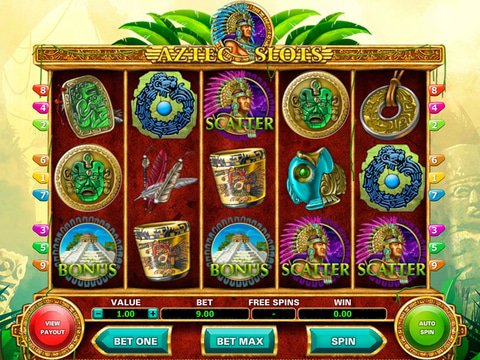
No. Ordinary free-slot balances consist of virtual credits and have no cash value. They cannot be transferred to a bank card, e-wallet or casino account. If a website advertises a prize, tournament or promotion, read its separate terms because that is not the same as unrestricted demo play.
Does practising improve my chance of winning?
No. Practice can teach controls, paylines, cluster mechanics and bonus features, but it cannot predict random results or alter RTP. A short winning or losing sequence is not evidence of a pattern. Use demos to understand the game and your reactions, not to develop a supposed winning system.
What should I do if free play feels difficult to control?
Stop the session and take a meaningful break rather than switching to another title. Remove shortcuts, discuss the concern with someone you trust and seek gambling support if the behaviour affects money, relationships or wellbeing. Difficulty respecting a free-play limit is a reason to avoid real-money gambling.









 English
 Afrikaans
 Albanian
 Amharic
 Arabic
 Armenian
 Azerbaijani
 Basque
 Belarusian
 Bengali
 Bosnian
 Bulgarian
 Catalan
 Cebuano
 Chichewa
 Chinese (Simplified)
 Chinese (Traditional)
 Corsican
 Croatian
 Czech
 Danish
 Dutch
 Esperanto
 Estonian
 Filipino
 Finnish
 French
 Frisian
 Galician
 Georgian
 German
 Greek
 Gujarati
 Haitian Creole
 Hausa
 Hawaiian
 Hebrew
 Hindi
 Hmong
 Hungarian
 Icelandic
 Igbo
 Indonesian
 Irish
 Italian
 Japanese
 Javanese
 Kannada
 Kazakh
 Khmer
 Korean
 Kurdish (Kurmanji)
 Kyrgyz
 Lao
 Latin
 Latvian
 Lithuanian
 Luxembourgish
 Macedonian
 Malagasy
 Malay
 Malayalam
 Maltese
 Maori
 Marathi
 Mongolian
 Myanmar (Burmese)
 Nepali
 Norwegian
 Pashto
 Persian
 Polish
 Portuguese
 Punjabi
 Romanian
 Russian
 Samoan
 Scottish Gaelic
 Serbian
 Sesotho
 Shona
 Sindhi
 Sinhala
 Slovak
 Slovenian
 Somali
 Spanish
 Sudanese
 Swahili
 Swedish
 Tajik
 Tamil
 Telugu
 Thai
 Turkish
 Ukrainian
 Urdu
 Uzbek
 Vietnamese
 Welsh
 Xhosa
 Yiddish
 Yoruba
 Zulu